In my fishing life I am yet to land a salmon. There are reasons why, that I will not speculate on here, but that certainly will not change the fact that I have (so far) been unsuccessful. It is the case that like so many other places, the rivers, and lochs I have access to are in steep decline. Looking at old catch returns, the excesses of years gone by seem extraordinary. Sadly, the chance to catch a wild Atlantic salmon on a Club water is gradually reducing. Perhaps if I ever catch and safely release such a fish, I should content myself with targeting more plentiful fish instead?
The week before the season ended, I was trying to get out on the river as much as possible at times when the water was fishable. The river, a tributary to a better-known system, had not produced anything beyond finnock and an odd sea trout for several years. This reflected the dwindling numbers fishing, but in recent times this still beautiful river seemed devoid of the salmon it previously held.
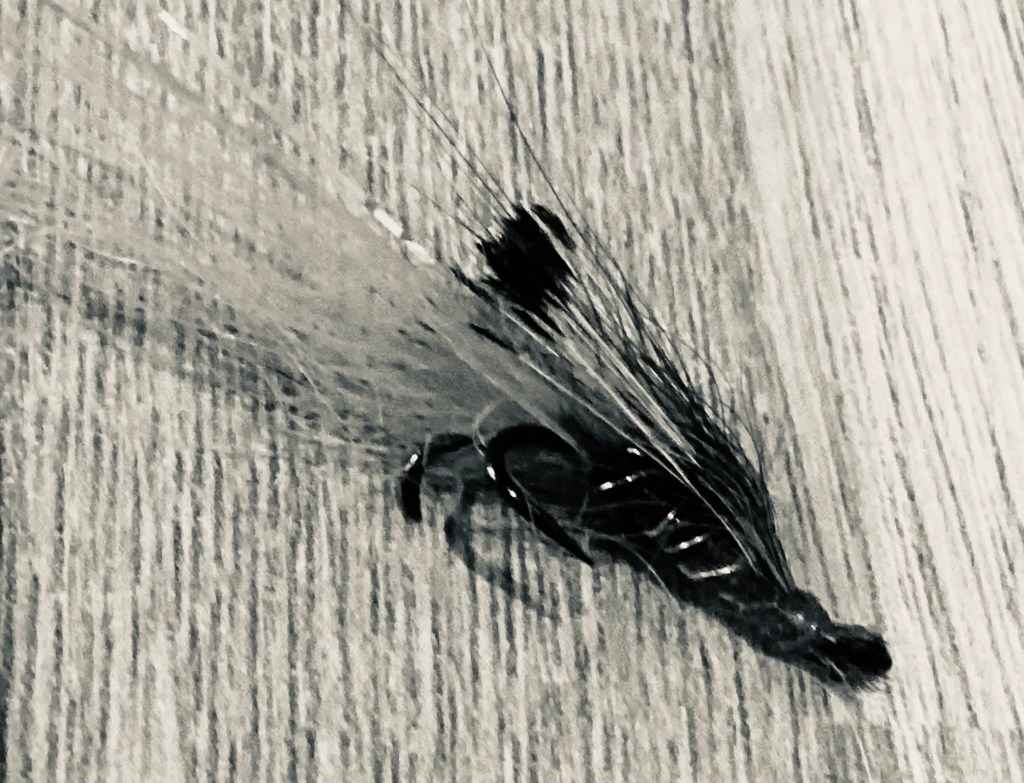
I was having a final go before picking up my youngest from school and the light was starting to fade. The water dropping, was still high and dirty as I went onto one of the previously prolific pools. Despite my lack of success, I have surprised myself with the small flame of hope I have carried this year. I covered the water carefully with an Ally Shrimp of my own but with no response. I decided to have a few final downstream casts to cover the tail and centre of the pool.
The take came from the deep and turbulent water, powerful and shocking. In a split second the rod tension lessened then increased again, then a feeling of something breaking against a greater power. The lightening thread disconnected leaving me feeling numb in the moments before the painful inquest would become stuck on repeat. Alas the discovery of the broken hook kickstarted my regret and disappointment about what should, could or might have been.
Footnote.
It took a few days for me to rationalise these events to find positives. I had persevered and found what was probably a good salmon. It had been tempted by my own fly. I had come close. Yes, I agonised over the hook, the declining opportunities, and the final score but there was enough to keep the small flame of hope alive for next year.
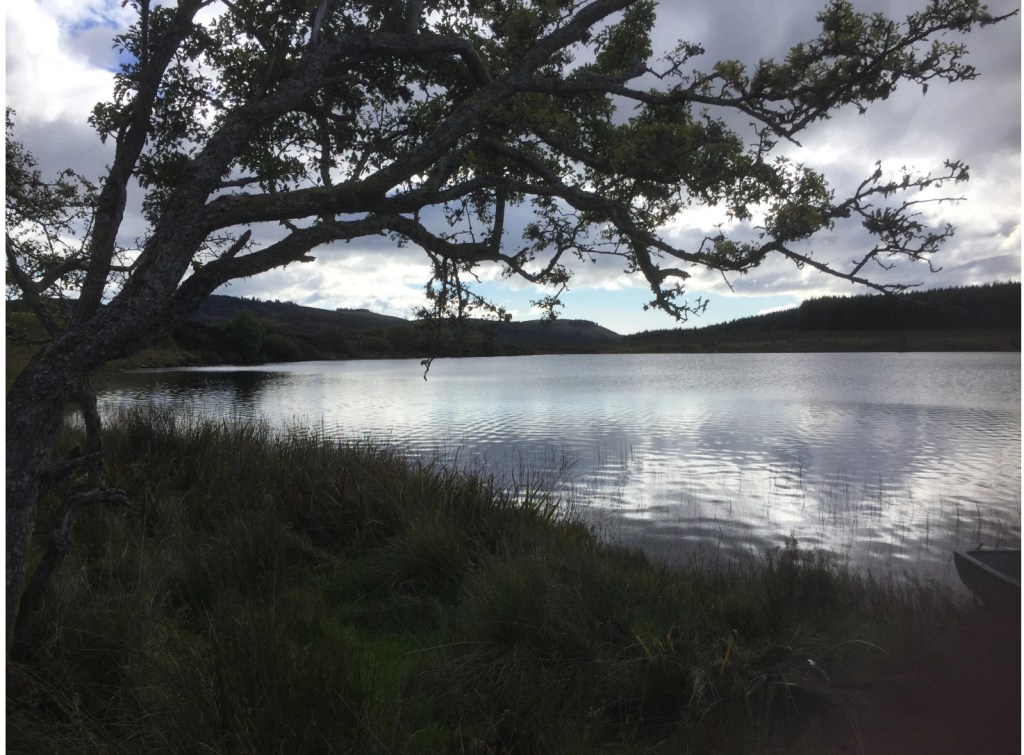
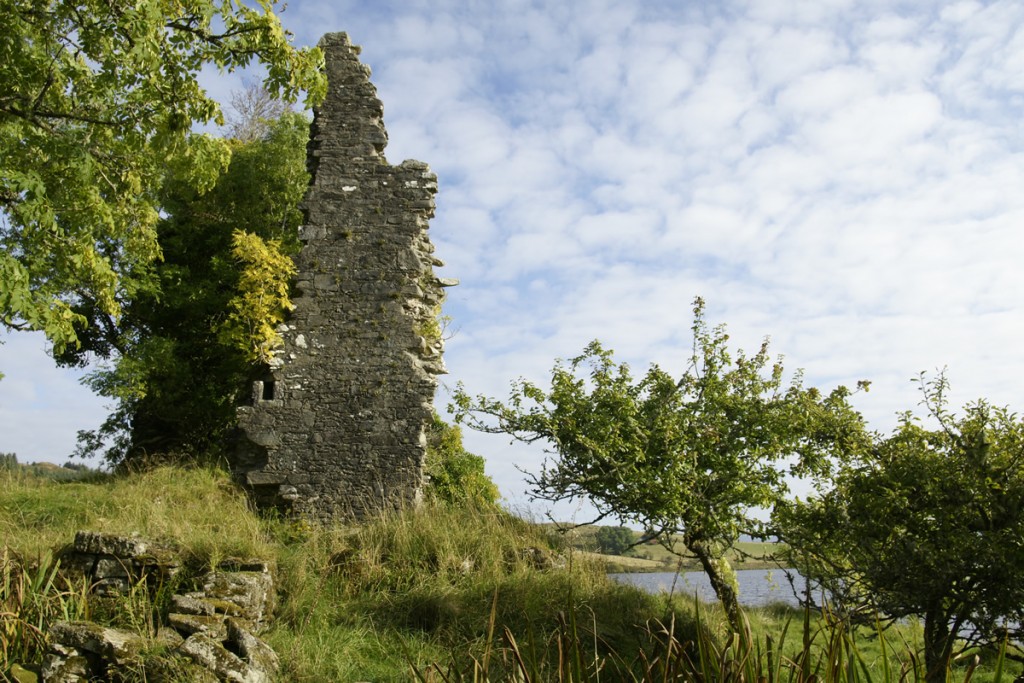
Today, on a bright early summer afternoon Loch Asgog exudes peace and tranquillity. Above, the expansive blue-sky frames two buzzards, soaring gracefully. A warm gentle breeze from the southwest corner rustles the reeds softly. The occasional bleating of this year’s lambs from the meadow above the north shore and the hum of bees from the whin bushes yellow flowers are the only sounds today. The sweet coconut scent is blown towards my boat a short cast or so from the land. Small trout are rising along the margins but to entice a bigger fish in the heat and direct sunlight would require much effort and more than a little luck. Instead, I lounge back in the boat, shield my eyes and enjoy the choreography of the buzzards overhead secure in the knowledge that in the evening I will have a much better chance of encountering one of Asgog’s dark and ancient trout. My senses are seduced with the natural elements, and I feel a desire to close my eyes and drift off for a nap. Instinctively I scan the surroundings and my gaze rests on the ruined structure on the west shore of the Loch. As quick as a sudden take from the depths, my mind fills with the shocking events from the bloody and brutal history of what was once a castle belonging to the Lamont clan….
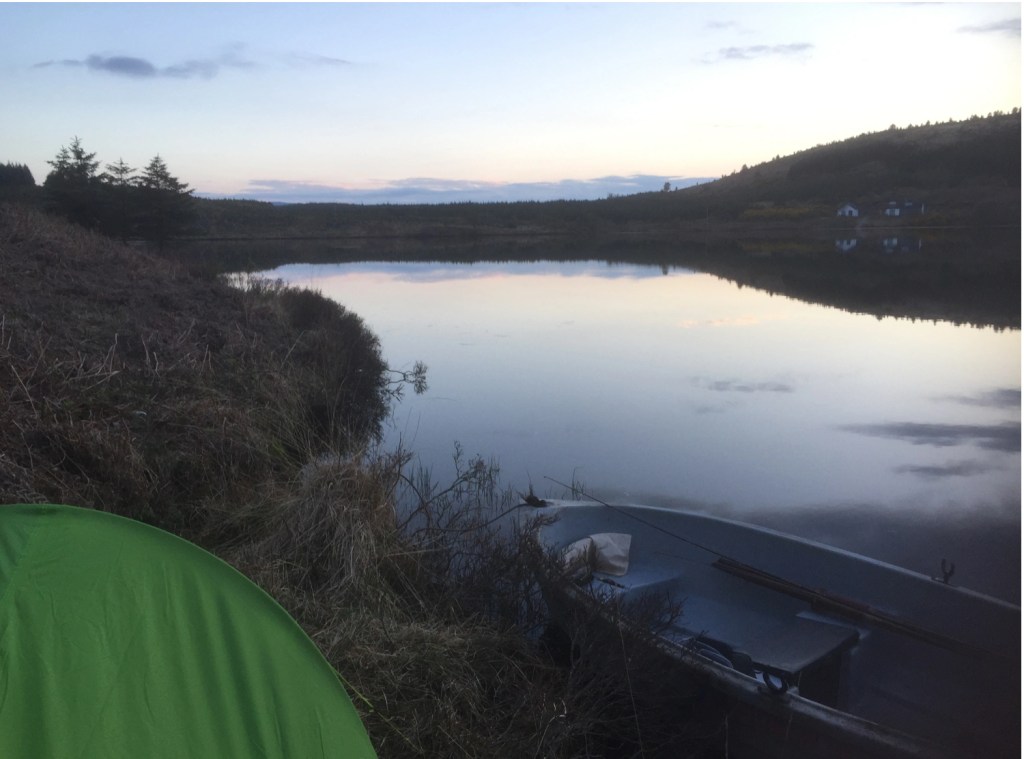
I had long fancied an overnight at Loch Asgog to maximise evening and early morning trout sessions. Packing my lightweight tent, rods and tackle into the car on a late May afternoon I was both excited about the potential and a little apprehensive about the midgies! I also had a slight foreboding regarding the haunting nature of the history of the place.
For this was the site of a violent episode in the Clan feud between Lamont and Campbell. In 1640 Asgog Castle together with nearby Toward were Lamont strongholds. Decades of rivalry, fuelled by differences in allegiances towards Scotland’s rule, and local land disputes came to a bloody head in 1646, when the Campbell’s laid siege to first Toward and then Asgog Castles. Overwhelmed and trapped in both strongholds the Lamont’s were promised their lives and freedom by Campbell, who then betrayed their written word to massacre several hundred of their rivals. Looking at the ruined castle on Loch Asgog it is at first hard to imagine the bloody and vicious chaos of 1646. The screams and human horror of the time are at stark odds with today’s tranquility. This beautiful and ancient place however had played witness to tribal conflicts even earlier…
Starting just after dawn, I had earlier drifted the west shore on a south westerly breeze. A sink tip fished my team of blue Zulu, Kate McLaren and Black Pennel, subsurface to good effect along the reed beds. A brace of ¾ pounders to the boat in the first hour, as well as numerous missed thumps, shook my early morning lethargy. The second hour drifting towards the ‘Alltan nam breac’ burn (trout stream) that enters the Loch at its northwest corner, produced 3 slightly smaller, but hard fighting trout. A missed offer from a seemingly larger fish, left me keen for more but as the sun rose and the breeze dropped the window of opportunity faded. I headed in for some breakfast and a rest in my tent. I dose off thinking about how this ancient place once was….
The discovery of Crannogs on Loch Asgog suggests safety and security were sought from the Loch thousands of years earlier as primitive people made their home in fortified island dwellings. These fortified homes were easier to defend from roaming predators and surrounding tribes and again evoke the visceral nature of our ancestor’s struggle for survival.
The breeze came and went throughout the day. The tent retained a temperature conducive to sleeping on top of my sleeping bag. The promise of swarming midgies remained as I ate and prepared to fish again. I decided on a floating line and started with hoppers and spiders. Electing to camp on the opposite bank from the castle ruin, I silently crossed the loch with the electric outboard to where the breeze was most obvious. I started my drift below the remains of the castle keep. Trout were beginning to rise here and there as I cast parallel to the shore along the weed bed. Two retrieves in a lively fish thumped me – fish on! I struggled to keep the fish from diving directly back to the cover of the weeds and managed to avoid the worst of it. The fish next made for the depths, allowing me to compose myself and locate the net. Soon after I landed what was to be my best fish of the trip- a trout of around the pound mark that had taken my orange bodied hopper. I enjoyed a productive evening with several further smaller but lively fish, including a nice fish on a claret Klinkhammer. The midgies made their appearance as the wind disappeared and fishing alone, I decided to come ashore before complete darkness. Over a cup of tea and supper I reflected on my trip. Overall, I had around a dozen fish across the two sessions. Tired and satisfied I drifted to sleep trying not to dwell on the fate of the Lamonts!
Next morning was damp and I walked the stiffness from my legs by exploring the remains of the man-made dam on the northwest shore. Here was another aspect of human conflict embedded in this natural beauty spot.
In the first half of the 1800’s the Loch was dammed to increase its capacity and provide a regulated flow of water to power mill wheels for the production of gunpowder. This continued for almost another century, a period coinciding with much of Britain’s global exploitation and colonial expansion. That one of the most important commodities for facilitating this was produced using the natural resources from the tranquility of Loch Asgog is another anomaly
The Loch holds a healthy head of wild but often elusive brown trout. Strong fighting well marked and often lean fish, who themselves seem to have a martial quality, appropriate almost, given the history. They often make a largely unannounced appearance, aggressively attacking a range of standard wets, nymphs and dries. Early mornings and evening sessions being generally most productive
Asgog is a Loch that for all of its peacefulness and beauty, has sleeping warriors and demons just under its surface, for those willing or daring to look!
Permits to fish Loch Asgog are available from Kyle’s of Bute Angling Club at several local outlets in the Kames area. The Loch remains part of the Barony of Inneryne and the current Baron is Baron Ronald Busch Reisinger, who is Honorary President of Kyles of Bute Angling Club.
More information at kylesofbuteanglingclub.wordpress.com
Every year it seems to be the same. I spend the first half of March with the best of intentions that this year I am going to take a mature and considered approach to my fly fishing. I attempt to brush up on my entomology as the logical first step. I try to memorise and practice a few Latin names and classifications. (I am sure that Gierach questioned the logic of striving to be able to identify staples in a trout’s diet in a dead language!) I start tying. I read up on patterns, their purpose and how deadly they are. I try to tie some new patterns and stock up on my usual go to flies. I clear boxes of the ones that were very substandard but were good enough last season. My tying is improving, but it’s an ongoing battle against age and my deteriorating eyesight. My early season outings are often concentrated on one of the local waters that actually has quite an abundant fly life and this fuels the early season passion that this season the code will be cracked. I will look back and chuckle at all the times I fished the wrong patterns in the wrong waters as I apply my new science and logic. I will join the ranks of the serious guys and understand all the technical how to articles in certain magazines that I have previously skipped by. I will know stuff that sounds impressive like all those experts. With my new understanding and sharp observations, I will shortly be the new Guido Rahr….
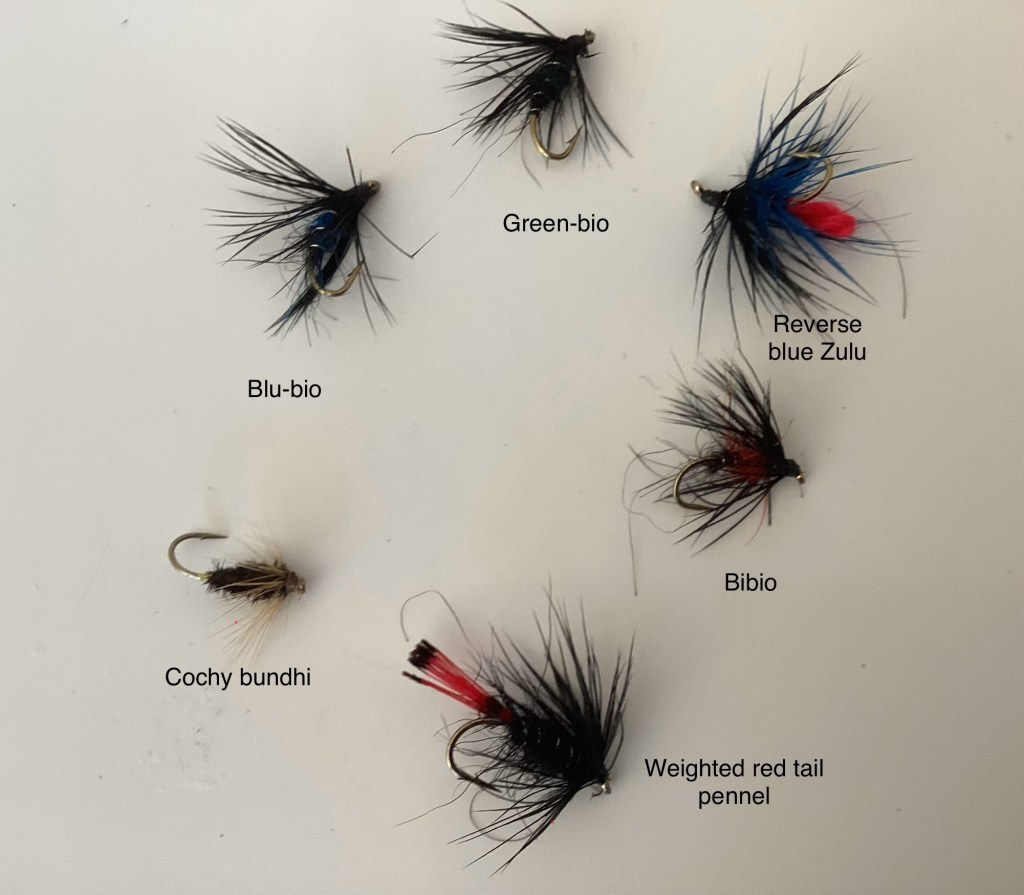
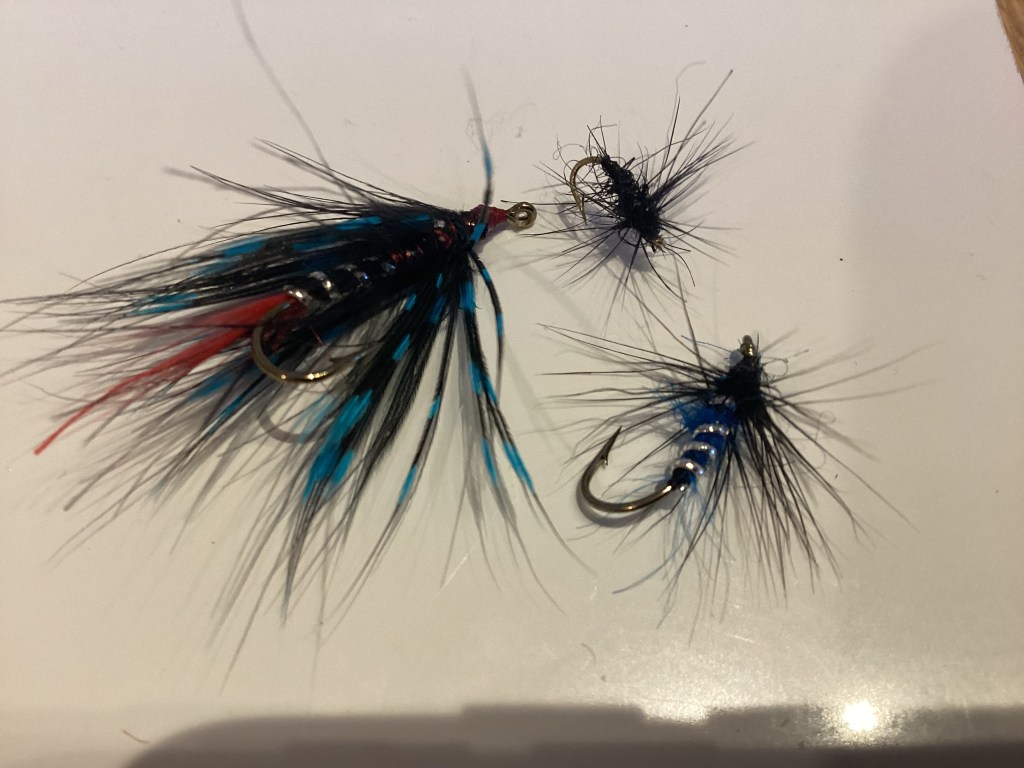
Or maybe not! By April’s end my approach starts to waver a little. I start to ensure some old favourites are plentiful and to hand. Kate McLaren, Pennel, Zulu, Bumbles, Bibio Eventually Greenwell’s Glories and Black Gnats are all that remain of my annual resolution to more fully understand the natural world.
By summer attentions turn slowly toward migratory species where success is less dependent on replicating nature and more about triggering instincts.
Now I am not in a position to make any precise or scientific comment perhaps, but for environmental reasons it does seem that fly life is not as abundant or predictable as previously. Weather patterns continue to blur the seasons here in west Scotland, significantly more than I can remember. In recent times our Club’s June moth competition has been wet, windy and cold more often than not for example. I suspect that climate change and environmental damage is changing aspects of entomology that in turn is changing how we fish successfully for trout in wild settings. The old debates about what constitutes fly fishing could be revisited here but that could be opening a whole new can of worms!!
In reality most of us probably know what we need to know about the type of fishing we prefer or that is available to us. The skill set needed is developed and honed. Perhaps the notion of all round expertise in fly fishing is a rare and largely unattainable concept. As our environment changes and new aspects to the discipline emerge perhaps the idea of a fly-fishing guru becomes more vague, more mystical. Fly fishing will always be many different things to many different people. How to articles and expert panels may fuel our desire to join the elite and yet the true significance and value of fly fishing is as faraway from human competitiveness as chalk is from cheese. Fly fishing becomes diminished and banal if it is reduced to simply maximising catches through technical knowledge and ability, when it is capable of giving its disciples so, so much more.
Perhaps returning to the humility and wisdom of the late John Gierach is where to find a way to separate the chaff from the wheat? As the great man once stated, ‘Something to think about: If you fish the wrong fly long and hard enough, it will sooner or later become the right fly.’
On reflection and considering the restrictions faced, the past trout season had some good moments. I caught some nice trout, had good company when the chance arose and got to spend time in beautiful Argyll. My wee boat never got launched on Loch Eck till July, but provided some enjoyable trips. I had a personal best for the Loch with a late season sea trout in the 5lbs region, caught on my own Donegal Blue variant. My river fishing was frustratingly limited by lack of opportunities and low water. I did manage a couple of modest trout from the Cur and learned a little more about the other rivers! I tried a very small local burn and was astounded at its hidden, wild and absorbing nature and the wild trout it held. I got to fish a couple of hill lochs and had some of the their ancient trout from the remotest and most special places. I had limited opportunities on the Kames lochs but the sessions I had were productive and enjoyable. I also had the privilege and opportunity to introduce some new anglers to our wonderful lochs. I am thankful for all the opportunities and special moments that the past season brought and try and see the challenging days as school days. Here’s to 2025 and the exciting days ahead!
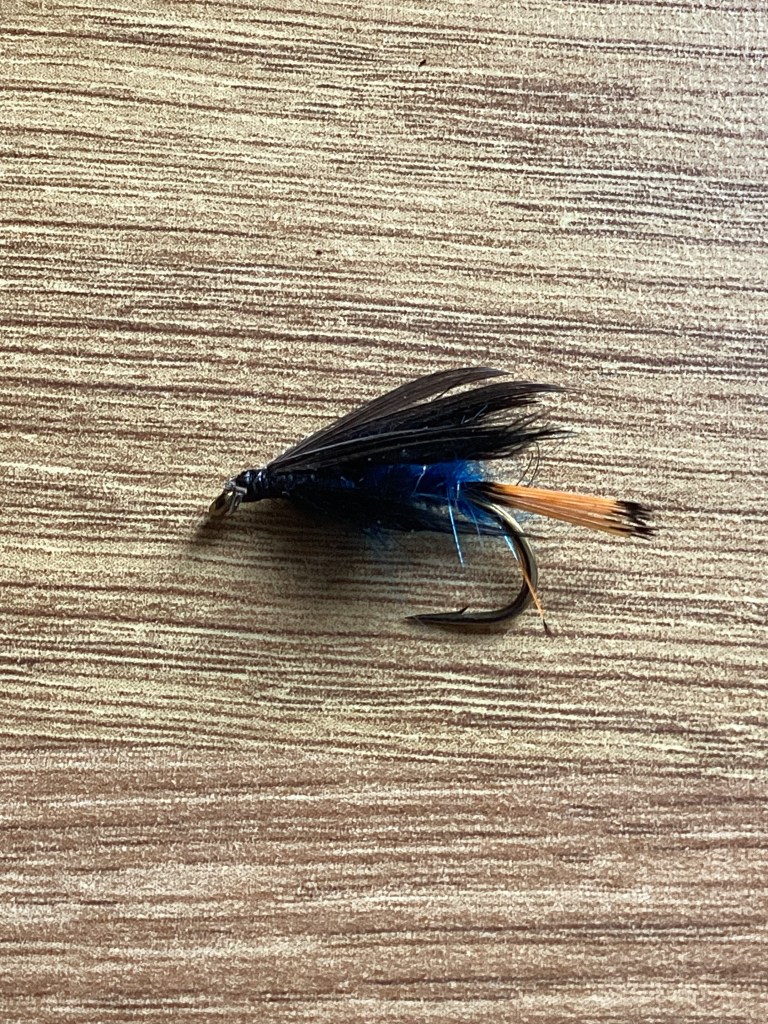
Although it was my wedding anniversary, my understanding wife had sanctioned a short trip to the river. It’s a spate river and the previous day’s rain might just mean that the water would be fishable, if I got there early enough. Thankfully all the usual variables of life behaved and I was able to arrive around 8am. The water looked ok and the surroundings were damp from last night’s rain and morning dew. I set up at the bottom of the beat with hope of an early fish. Alas the morning passed with only one sign of a fish – a sea trout of around the pound mark that followed my fly and was on momentarily. The cloud was lifting , the sun rising and the water was dropping, as were my chances of catching I felt. I had got as far as the middle pools and decided a break was needed. Coffee and a biscuit while watching the pool. I decided to have a change of fly , putting on a size 8 Donegal Blue variant. Initially I had tied this on a smaller hook with trout in mind and it had done ok. This would be my last pool of the session, ensuring I was home at a reasonable time and besides the window of opportunity was all but shut I felt.
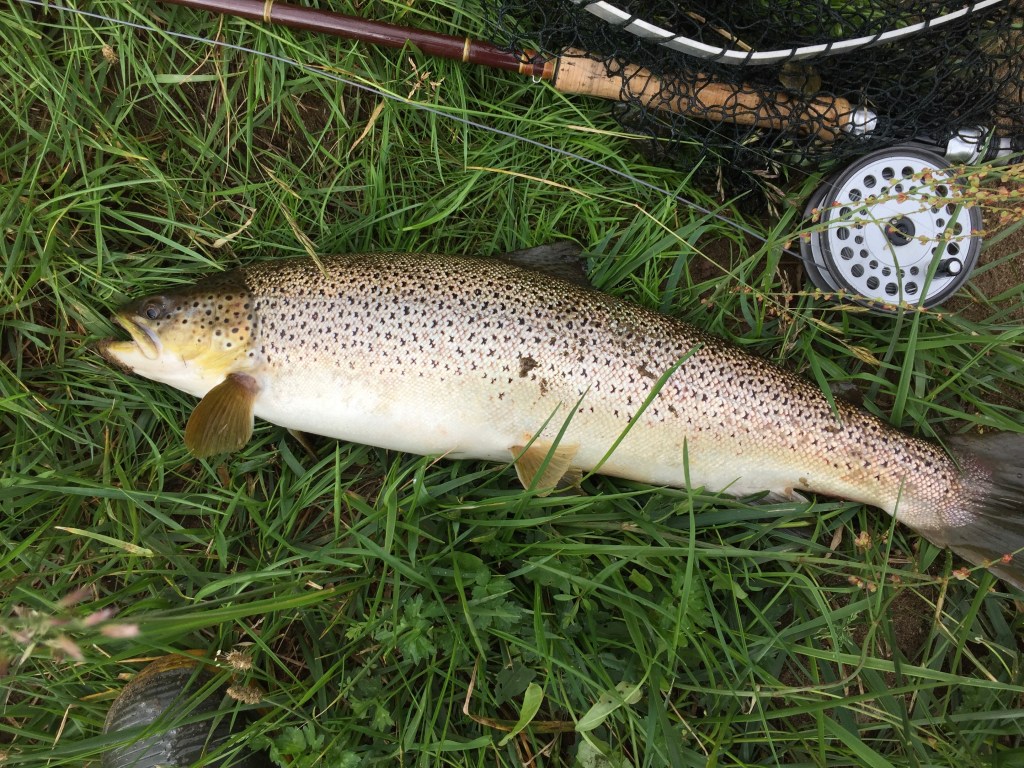
Starting at the top of the pool I carefully fished my way down and through the stretch of deep and still shaded water. All remained quiet. The tail of the pool narrowed to a faster run out and free from the trees further up I was able to put out a longer line. My thoughts were on getting home and perhaps getting some flowers for my good lady, when I hit something solid. I raised the rod thinking I had snagged a rock when a steady bend accompanied by a fast stripping of line and a screeching of my reel told me otherwise. Suddenly I was in a struggle with, for me at least, a significantly large and powerful fish. I snapped out of my shock and surprise and tried to focus. I was sure this felt like that elusive grilse I had been trying to catch. My thoughts then turned to my leader knots. They were all holding well so far! The fish headed upstream giving me an advantage and stayed deep. I caught one tantalising glimpse of a large tail and began thinking about where and how I could land this fish. The fish came to the surface and rolled. This was a sea trout and a bigger one than I had ever caught and this prompted more thoughts of the nail knot I now use for fly line to leader. The fish appeared to be well hooked. Think positively, keep calm I tell myself. The fish headed down stream but turned and went back to the depths of the pool. More strong runs, back to surface. It was definitely tiring however. I planned to stay put and try and slip the net into the deep water directly in front of me. Steady now, steady. The fish saw the net however and was off again. On the third attempt I got it and walked slowly backwards and lifted the fish in the net onto the soft grassy bank and what a beauty it was. A plump, well conditioned female. I got a snap with the rod in for scale. My estimate was north of 7lbs. It had become a warm sunny day and I was keen to get this beautiful fish back into the coolness of the water. I cradled her in the water for a moment before a flick of that powerful tail propelled the fish away.
In the long months that are January and February, apart from making preparations for the trout season, I sometimes have a short outing targeting pollock and coal-fish. This year I combined the pollock pursuit with another challenge. I like vintage tackle and believe that many decent but discarded items of tackle are still very capable of doing a good job. I hate throwing away perfectly functional tackle to see it replaced with modern , fancy but inferior stuff. When clearing out one of the Club’s boat houses a while ago, we discovered some old and damaged rods. One was an 8 foot spinning rod from the 70’s. It had never been a top quality rod but did have a nice action and feel to it. I vaguely remembered the model from years gone by. This example had a damaged reel seat, was lacking a couple of line guides and the ferrule was hopelessly jammed. Unable to throw it in the skip, it lay in my shed for a few years . At some point I acquired a nice old Daiwa reel from the same era. It was also in poor order. A thorough clean and service and the addition of one or two donor parts had the old Daiwa purring. A loose plan was forming somewhere in my busy and fuddled head. I started attempting to separate the two pieces of the spinning rod. Various lubricants, temperatures, tools and brute strength were all applied, to no avail. Replacing the ferrules would have been more than the rod was worth, and so I decided this old rod would be a one piece! I roughly whipped on a couple of recycled line guides and moved my attention to the damaged reel seat. It needed to be replaced basically- not a terribly difficult task but again beyond the time and resources I was willing to sacrifice. I still really wanted to cast this old rod and hopefully prove that it was still useful by catching with it. With the help of strong gaffer tape the reel seat held the old Daiwa securely and so when I decided to have a pollock sortie last week , the 8ft ‘one piece combo’ was squeezed into the car.
With an old 1 oz Abu Koster attached the outfit cast really well and the Daiwa was smooth and robust. I hit into some fish for a short period but landed only one from the difficult and high rocky perch I was on, a fine fish of just over 3lbs.
I have several really decent spinning outfits. This rough and ready addition however did the job and was really absolutely fine to use. Point made, (to myself at least), I think I’ll keep it for mackerel bashing in the summer.
The Colonsay Boat & letter as found at a Croft around 1960
For scores of years people have enjoyed sport and competition when pursuing the pastime of fly fishing. For some this has become very serious and professionalised but the best version of competitive fishing for us will always be the gentle and fun scramble for bragging rights among friends on a trip together.
By the late 1800’s Colonsay was something of a sporting estate for privileged visitors, whom upon invitation and approval by the Laird, would rent the sport for a period of weeks or months. This was much more than acquiring permission and paying to fish – no, this type of arrangement usually involved taking over the House, servants and gamekeepers, being waited on hand and foot and having unlimited access to all the fishing and shooting available on the Island.
Alfred Erskine Gathorne-Hardy, a Tory MP and son of prominent statesman Lord Cranbrook,,was a notable sportsman who along with his friends and acquaintances, was a regular visitor to Colonsay. Though very different in terms of wealth and position, Gathorne-Hardy wrote of his great enjoyment of the friendly competitiveness he had with his acquaintances. Wagers, as well as bragging-rights added spice to their sport, and it is very likely that a trophy or cup would have been put up for the winners. Post war periods saw a return to sport, like angling, by not just the gentry, but ordinary people also and while for most the hospitality would have been somewhat humbler the competitive edge was similarly enjoyed among friends.
Today we keep the tradition alive with annual visits to fish Colonsay’s trout lochs. The ‘Colonsay Boat’ is awarded to the most successful angler over the period of the visit. The trophy consists of a brass fly reel, circa 1950, apparently found in mud on a Loch side, mounted on an end of timber from an Island croft roof, removed during renovation. The timber has been roughly shaped to resemble the bow of a fishing boat. The ‘Colonsay Boat’ is most likely from the mid 1960’s and was given to us by a now deceased, elderly Islander and friend.
A fitting testimony to the winner of our friendly contests, the ‘Colonsay Boat’ has a growing folklore of fishy tales, near misses and lots of laughter and happiness.





 Argyll Trout Fisher